
The Wrong Hostage
Why the Iran of May 2026 is not the Iran of June 2025

The Strait of Hormuz this morning is a one-way path.
CENTCOM has cleared a single channel out — not in.
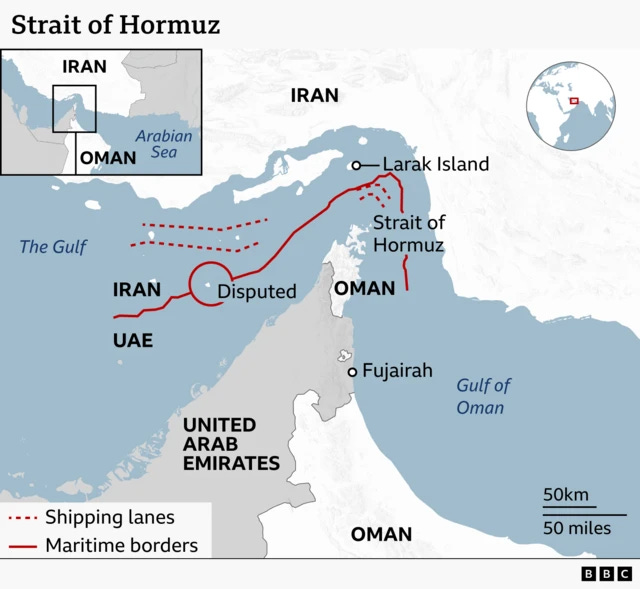
Project Freedom is operational.
But it is not a restoration of freedom of navigation.
That distinction is the entire trade.
Daniel Byman’s CSIS analysis from last week has the architecture right — paradoxical equilibrium, blockading the blockaders, the cost-bearing asymmetry, the credibility trap, the divergence with Israel, the silent partnership with Beijing. What the piece does not quite ask, and what is now the most important question in the room, is this:
Why is the Iran of 2026 behaving so differently from the Iran of June 2025?
The two governments are nominally the same.
The Supreme Leader has changed — Mojtaba Khamenei succeeded his father after the 28 February strikes, and is reportedly communicating with negotiators via runners passing notes under an active Israeli assassination threat — but the apparatus around the office has not. The IRGC chain of command is largely intact. Abbas Araghchi still runs the foreign ministry. The economic constraints on Iran are arguably harsher than they were last summer.
And yet the strategic posture has inverted.
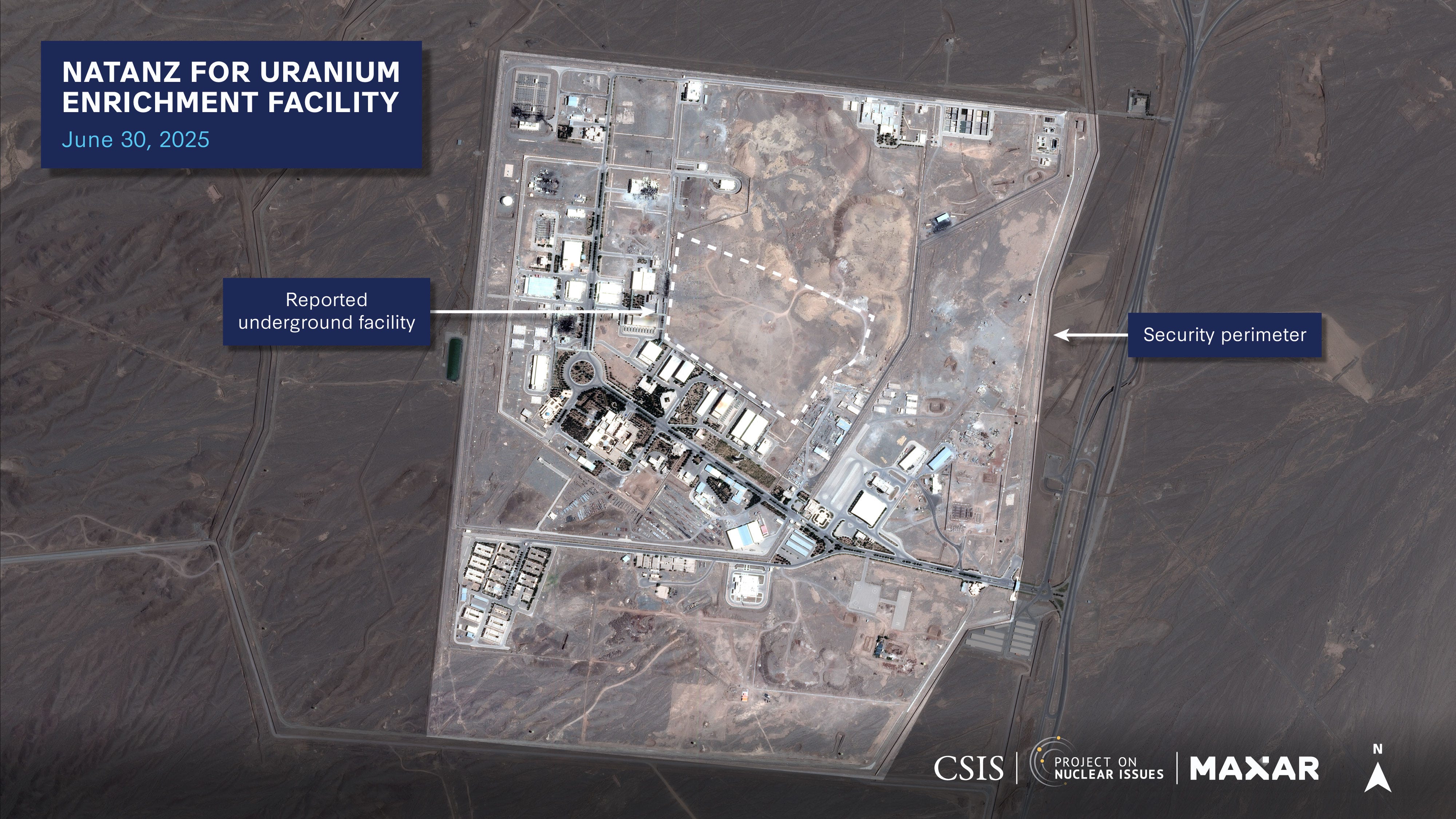
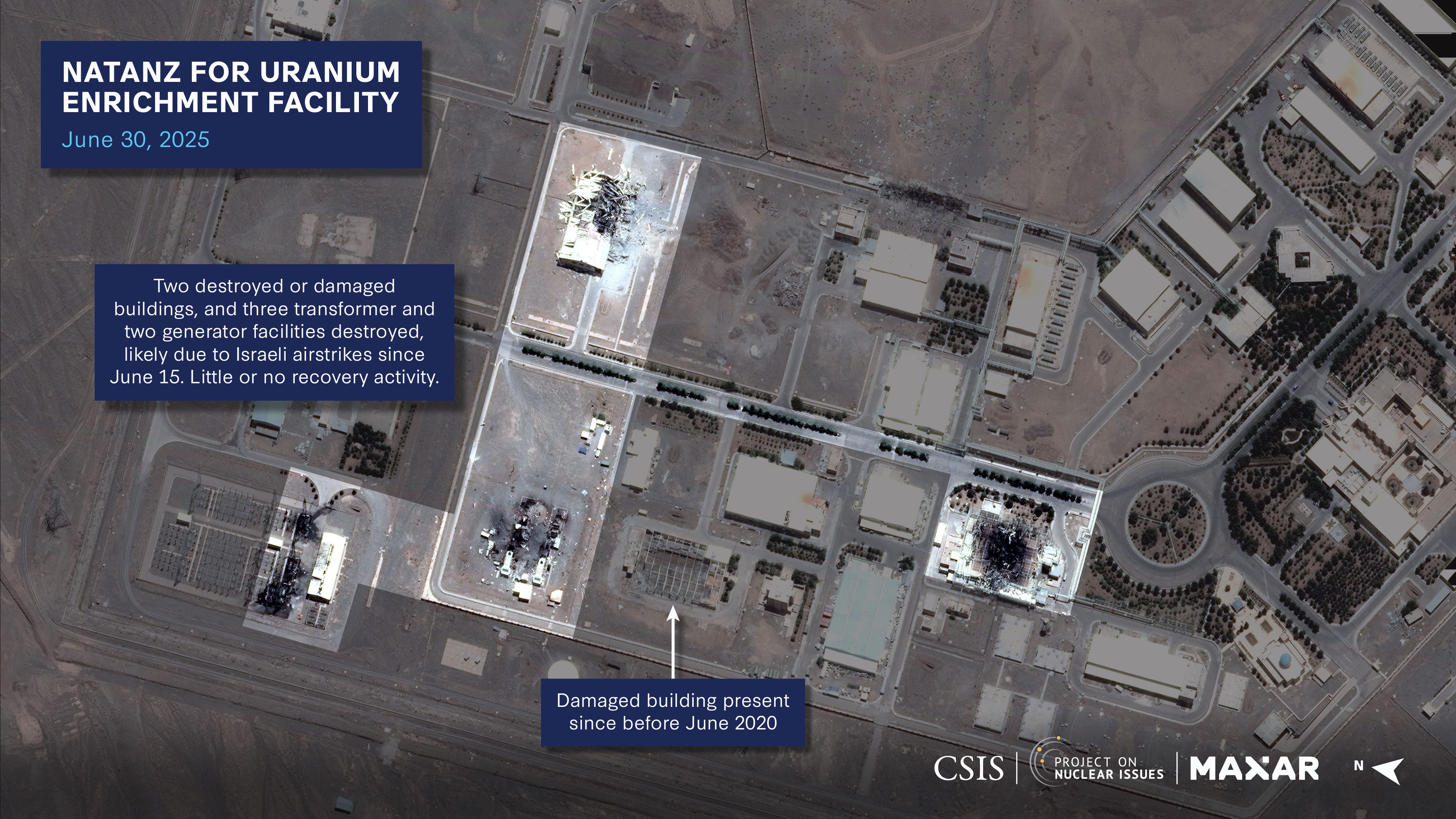
In June 2025, when Israel and the United States ran Operation Rising Lion against Iran’s nuclear infrastructure — the B-2 strikes on Fordow, Natanz and Isfahan that Trump described as having “obliterated” the program — Iran’s response was scripted. A calibrated retaliation against Al Udeid in Qatar. A ceasefire accepted within twelve days. Tehran absorbed the strikes, lost the program, and went home.
In 2026, Iran has done the opposite.
It closed the strait on 28 February. It has held the closure for nine weeks across what is now a dual blockade. It has refused the off-ramp Washington has offered three times — at Islamabad in early April, in the failed second round on 12 April, and again over the weekend in the response to its 14-point counterproposal. The IRGC has been collecting tolls of over $1 million per ship through the truce window and conducting selective seizures of merchant shipping. Iran’s military command this morning issued a public threat to attack any American vessel approaching the strait, even as Project Freedom began.
The Iran of June 2025 took the off-ramp.
The Iran of May 2026 is rejecting it.
That is the most important strategic fact in the room. It deserves a clearer explanation than the one consensus is offering.
The Wrong Hostage
The lesson from June 2025 was not the lesson the United States and Israel intended to teach.
The intended lesson was deterrence.
The cost of pursuing a nuclear weapon is the destruction of the program itself.
That lesson was delivered. The B-2 strikes on Fordow penetrated the centrifuge halls.
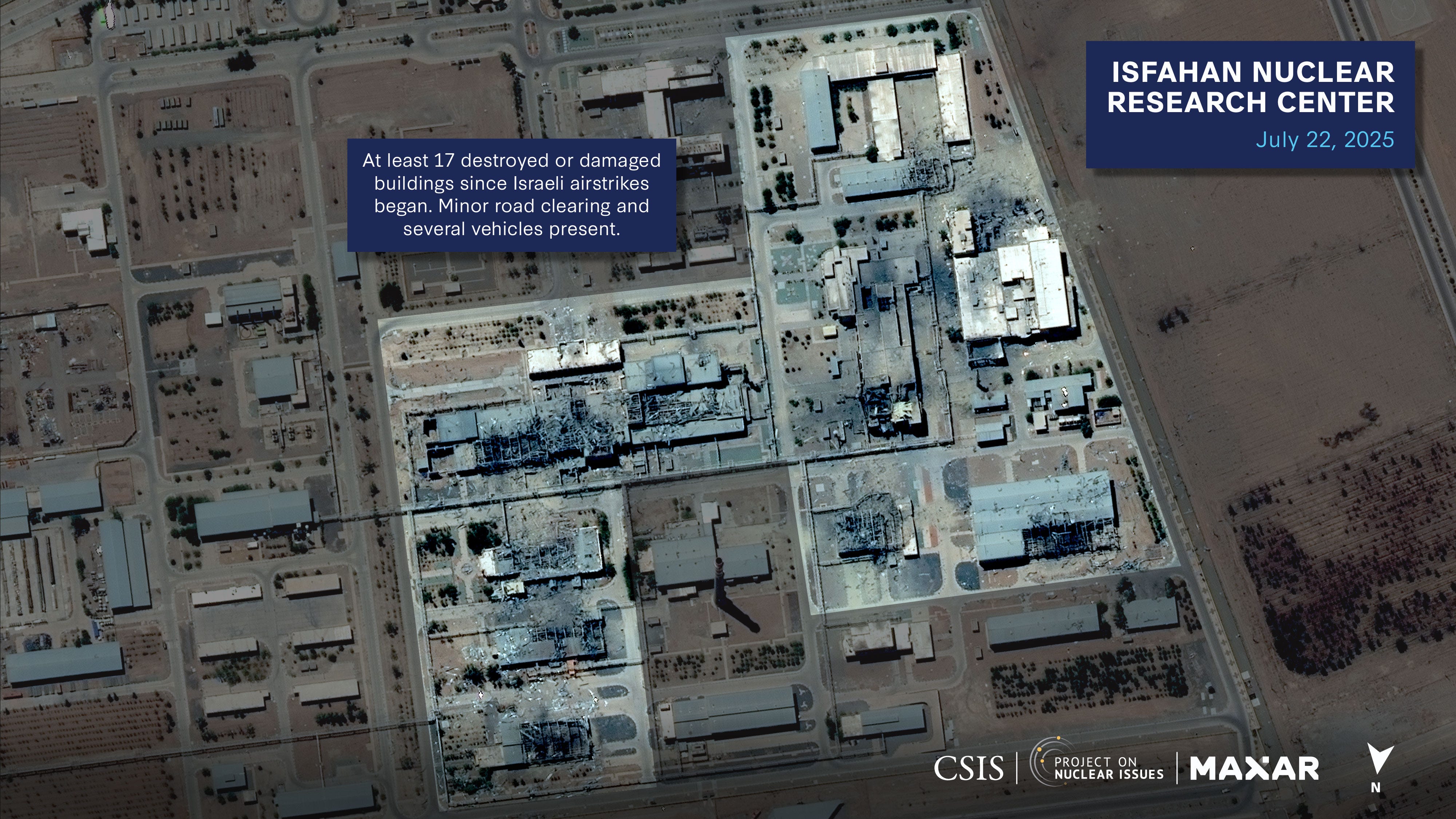
There was a parallel lesson Iran took home, and it was not about nuclear weapons.
The parallel lesson was that Iran’s nuclear program had been functioning as a hostage, not a shield.
The program had been the asset Iran had spent twenty years building partly to deter exactly this kind of strike. When the strike came anyway, and Iran was forced to accept the off-ramp before its conventional retaliation could escalate further, the regime discovered that the asset was negotiable. The program could be destroyed, and the regime could survive its destruction.
The program had been the wrong deterrent.
What survived June 2025 intact was geographic, not technological.
The Strait of Hormuz cannot be obliterated by a B-2 bomber. It cannot be carried away in a centrifuge truck. It cannot be replicated elsewhere by any state actor. It is, structurally, the only deterrent in Iran’s inventory that survives a kinetic phase, because it is the deterrent the kinetic phase cannot reach.
The Iran of 2026 has internalised that inverse.
The Iran of 2025 had not.
That is the doctrinal update.
The closure of 28 February was not a panic.
It was the correction.
The Cost-Bearing Wager
What follows from the doctrinal update is a different game theory.
In June 2025, Iran was playing a one-move game. Survive the strike, take the off-ramp, preserve the regime. The decision rule was simple.
In 2026, Iran is playing a multi-round endurance game. The decision rule is different. Outlast the opponent on cost-bearing.
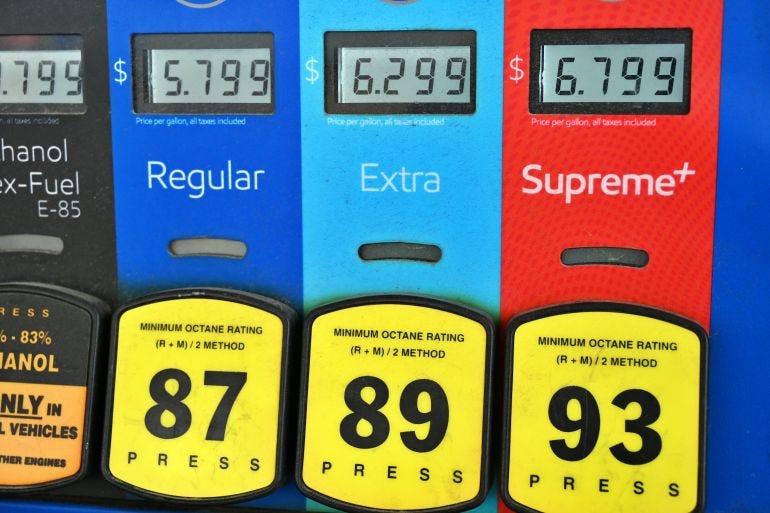
Tehran’s reading of the American electorate, gleaned partly from Pew’s late-March polling showing 73% disapproval of US military action and substantial conditionality on gasoline prices, is that Trump’s coalition cannot tolerate sustained $4.46 gasoline. The wager is structural. Iran’s pain tolerance is high because pain in Tehran is distributed across multiple disaggregated principals, none of which alone owns the outcome. The IRGC is not responsible for currency stability. The foreign ministry is not responsible for military operations. The Supreme Leader’s office — particularly under a leader Hamidreza Azizi at the German Institute for International and Security Affairs argues is “not quite supreme” — is not responsible for parliamentary politics.
Each fragment can absorb its share of the pain because it does not own the entire portfolio.
Trump, by contrast, owns the entire portfolio.
The 60-day War Powers letter to congressional leaders on Friday — claiming that hostilities have terminated because the ceasefire is holding — is exactly the move of a singular principal trying to escape a constraint that a multi-bodied principal could simply outwait. The legal interpretation is novel. The political pressure that produced it is not.
This is the asymmetry that defines the standoff.
Iran’s fragmentation is its endurance. America’s unification is its time constraint. The IRGC can hold a position the Iranian foreign ministry would not defend, and revisit it at the next session without anyone formally losing face. Trump cannot hold a position the Iranian electorate has decided gas prices have rejected.
That is the cost-bearing wager Tehran is running.
The Iran of 2026 has reasons to believe it will win.
The Many-Body Problem
The same fragmentation that makes Iran a more enduring opponent makes it a harder negotiating partner.
Two-party negotiation theory assumes unified principals on each side. The Islamabad talks have demolished that assumption. Each delegation in the room is itself a coalition that cannot agree with itself, and the result is the multi-body negotiation that Pakistani mediators have been trying to translate since early April.
This morning’s response to Project Freedom illustrates the mechanism.
Three Iranian voices issued three subtly different statements.
The three statements are not contradictory.
Each is performed for a different domestic audience — the regular military establishment, the IRGC’s revolutionary base, and the parliamentary structure that controls legitimacy.
Mojtaba Khamenei’s silence sits above all three, and according to International Crisis Group’s Ali Vaez, his absence is functioning less as weakness and more as a protective shield for negotiators who can attribute positions upward without anyone being able to verify the attribution.
The American delegation is not better integrated.
Trump’s posture is not Vance’s posture, which is not Witkoff’s (whose Islamabad trip was cancelled on Saturday), which is not Hegseth’s, which is not Bessent’s. Israel is the fourth voice, formally outside the bilateral but inside the war. Netanyahu’s red lines on missile capability and Hezbollah are existentially weighted in a way the American red lines on Hormuz are not. They constrain what Washington can credibly accept at the table without losing Tel Aviv.
If Iran has five people in the talks and at least three voices and no unified position, the same is true for Washington, and the same is true for the Israeli shadow delegation that is not formally in the room but governs what the American negotiators can say.
The Pakistani mediators reportedly spent more time helping Iran negotiate among itself than facilitating exchange across the table.
The arithmetic is brutal. Roughly fifteen people seated around a table where the substantive positions number nine.
That is not a negotiation. That is a probability distribution.
The Toll, Priced In
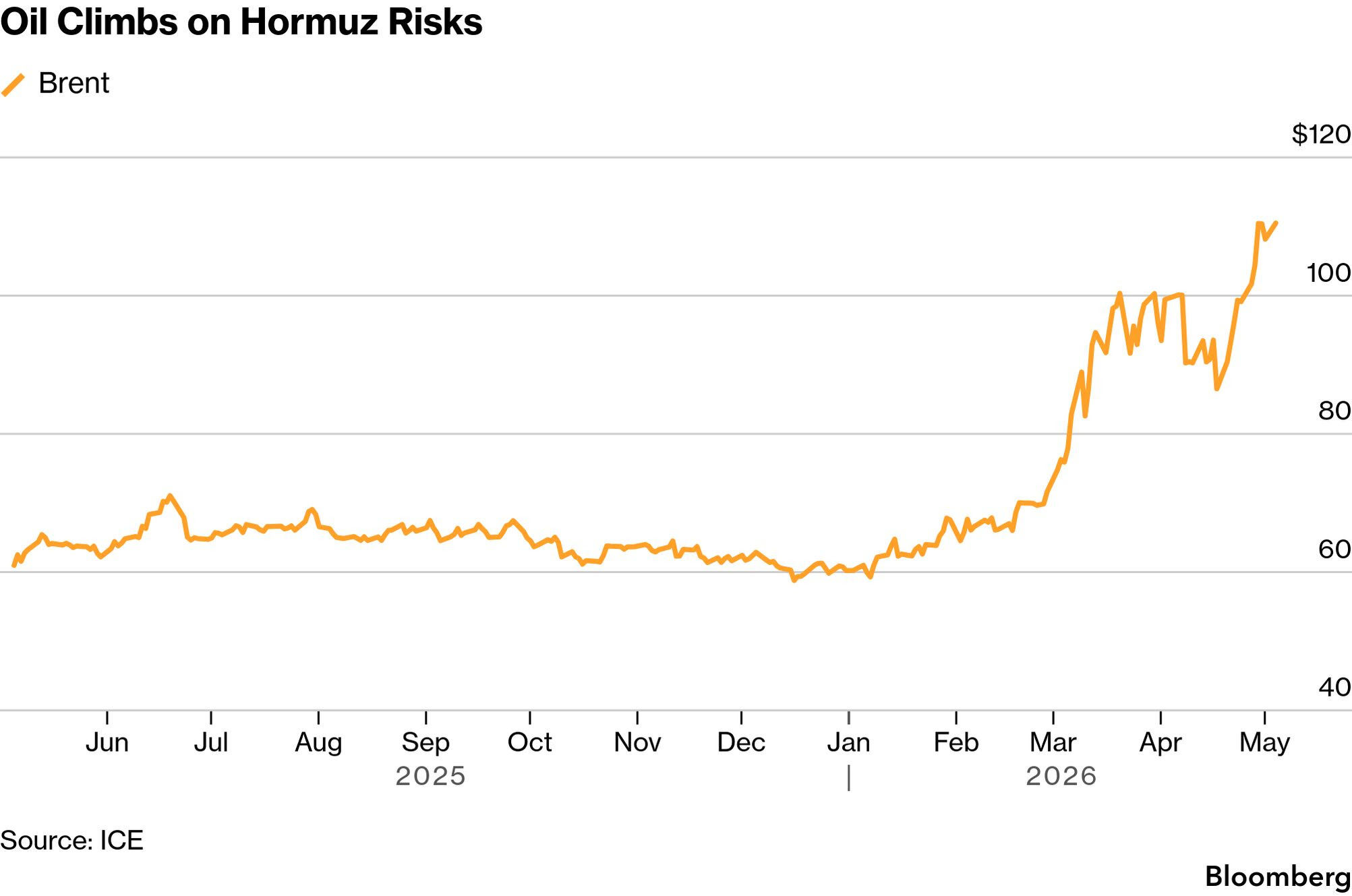
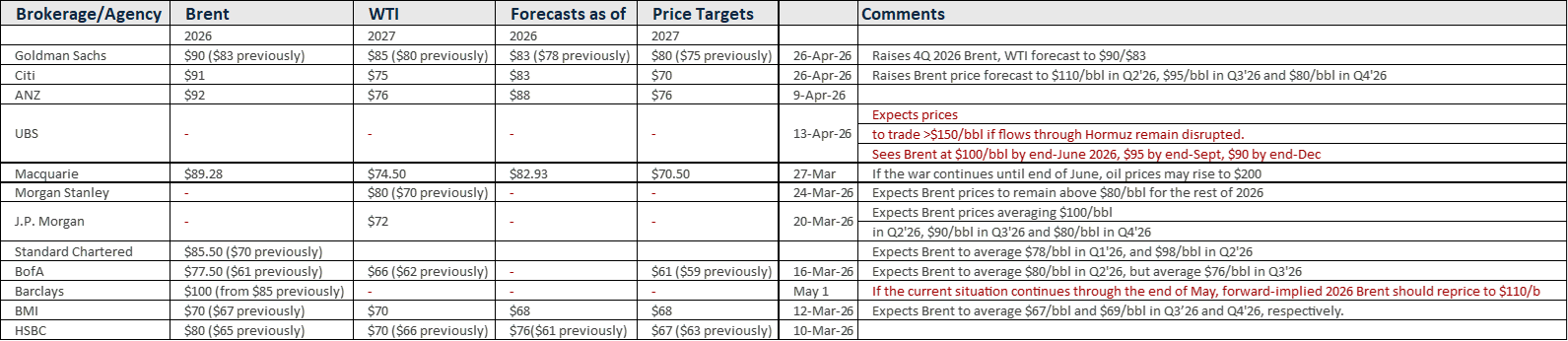
Goldman has revised Q4 Brent to $90 from $80. Citi has flagged $150 as plausible if disruption runs through end-June. The IEA has called this the largest supply disruption in history. None of these numbers price a return to pre-war conditions.
The phrase deserves to be lifted out of his closing paragraph and made the centre of the analysis.
The 12-day war taught Iran that the wrong asset had been guarding the regime.
The closure since 28 February has been the correction. The Project Freedom operation that began this morning is unlikely to reverse that correction, because two US-flagged ships escorted by a small carrier battle group is not a restoration of a system. It is a demonstration that the system now requires a small carrier battle group to operate at all.
The price loop the asset class has not finished pricing runs in both directions.
Markets will read every Project Freedom convoy that completes as evidence that Iran’s blockade is breakable, and that reading will pull Brent down. Markets will read every small-boat swarm, every drone strike on a tanker near Fujairah, every IRGC seizure as evidence the blockade is intact, and that reading will pull Brent up.
The price will oscillate inside that band until one reading is decisively confirmed.
The framework is uncomfortable here precisely because the participants — Trump, the IRGC, the war-risk underwriters in London, the shipping desks at Maersk and CMA CGM — are all reading each other’s reading.

The convoy completes because the underwriters allowed it; the underwriters allowed it because the convoy was assembled; the convoy was assembled because Trump needed the headline; Trump needed the headline because gasoline is at $4.46.
There is no fundamental price equilibrium underneath this. There is only a negotiated equilibrium between parallel readings.
HFI Research put it directly on Substack this morning:
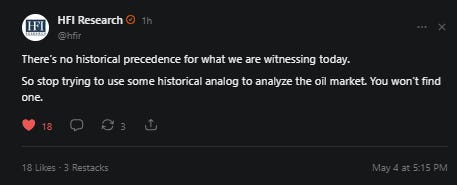
There is no historical precedent for what we are watching, and historical analogies will not produce clean answers.
That is correct on the political economy.
It is correct on the energy market structure.
But it is wrong on the maritime mechanics.
The maritime mechanics — the mine warfare problem, the ballistic missile inventories that are bleeding faster than they can be rebuilt, the Iranian missile program’s eighteen-month reconstruction arc that runs through Chinese solid-fuel supply chains — are very nearly the lesson of the 1980s Tanker War, replayed with worse equipment on the US side and a more centralised opponent on the Iranian side.
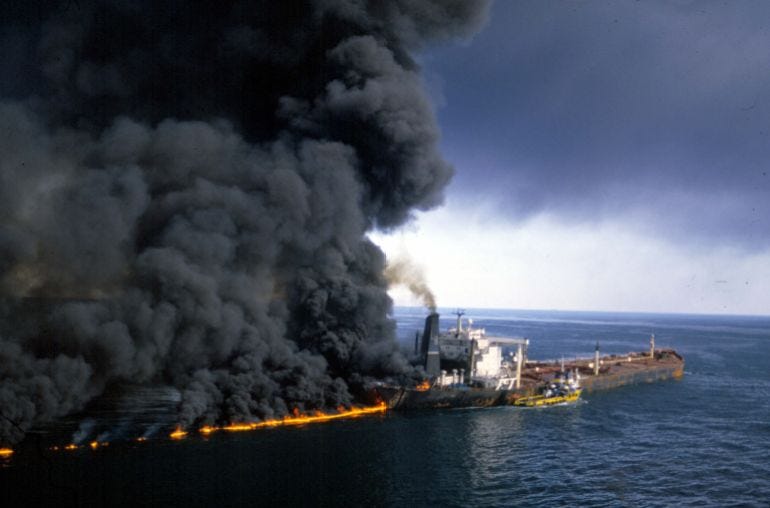
The Bridgeton hit a mine on the first convoy out of Earnest Will in July 1987.
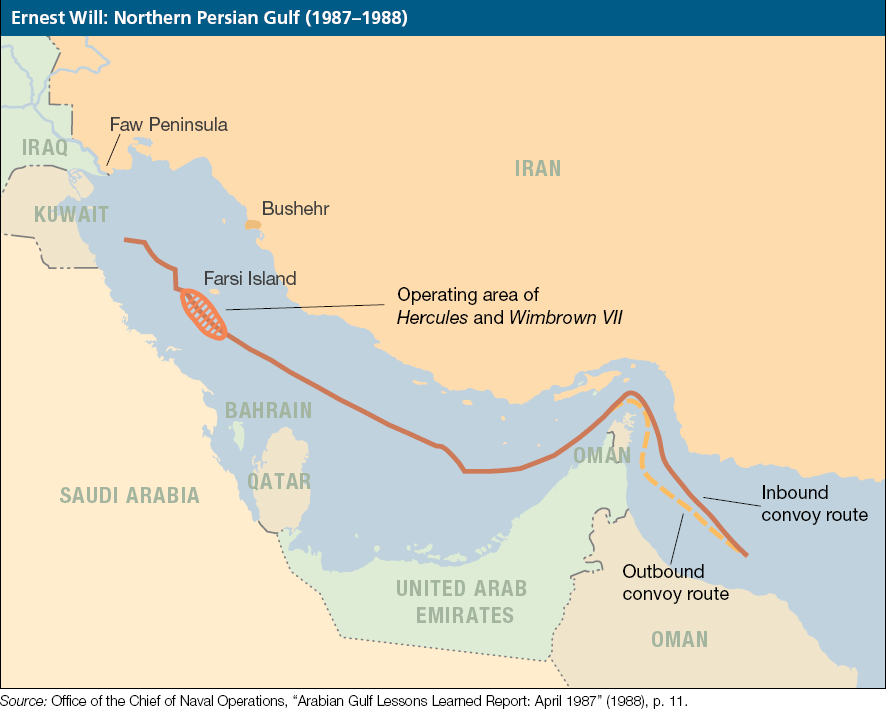
The current US Navy has fewer dedicated minesweepers than it had then.
The munitions math runs the other way: Iran’s missile arsenal is finite and depleting, but the strait is permanent, and the marginal cost of a sea mine is trivial relative to the marginal cost of a Khorramshahr-2.
That is a separate piece, and I will write it next.
The Iran of 2026 is the one teaching us the doctrine.
I think the sharpest point in your essay is its exposure of an ironic form of American self-display: if two U.S.-flagged vessels require large-scale military protection just to pass through the Strait of Hormuz, then this is not the restoration of freedom of navigation. It is a change in the cost structure of that order.
The market is still learning how to price this new form of structural risk.